1. Real job proof
Show the pipe access, leak symptom, moisture reading, thermal image, or repair route before asking a visitor to trust the claim.
Project examples help homeowners see what leak source documentation, pipe access, moisture checks, and repipe planning can look like before finished surfaces are repaired. These pages focus on the plumbing side of water damage: where the water came from, how the pipe area was exposed, and what should be documented before a wall, floor, cabinet, or trim area is closed again.
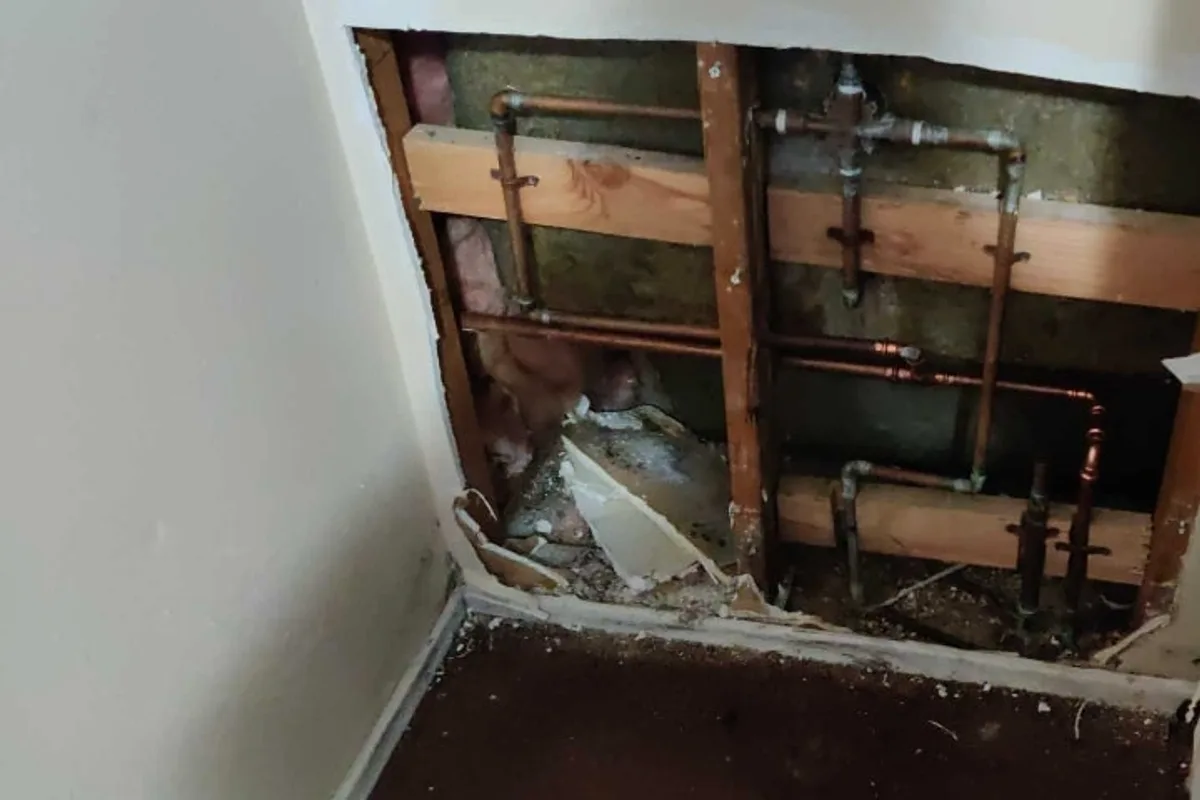
This Lake Elsinore project example shows a repipe-related water loss where opened wall access, exposed copper piping, moisture readings, and pipe-area photos helped document the plumbing source before repair planning moved forward. It is written from the plumbing side of the job: what the homeowner may notice, what the opened pipe area showed, and why the repair decision should be tied to evidence instead of assumptions.
The SoCal project format follows a proof-first structure: a clear job summary, real photos, project story sections, scope notes, local service links, FAQs, schema, and a gallery page when there are enough photos.
Show the pipe access, leak symptom, moisture reading, thermal image, or repair route before asking a visitor to trust the claim.
Explain what the homeowner noticed, what was documented, and why the repair path was chosen without exposing private job details.
Connect the project to slab leak detection, repiping, burst pipe repair, and plumbing repair pages that match the actual work.
Many plumbing calls begin with symptoms that do not show the actual failure point. A homeowner may see damp baseboards, water under flooring, a cabinet toe-kick that stays wet, low pressure, a meter that moves when fixtures are off, or moisture in a wall cavity. Those symptoms can point to a fixture leak, a wall-line leak, a copper pipe failure, a failed fitting, a reroute need, or a slab route that deserves further testing. Project examples give homeowners a clearer picture of what documentation can look like when the pipe area is opened and the source needs to be understood.
The goal is not to make every leak look the same. It is to show the kind of evidence that matters before a repair decision is made. Pipe photos, moisture meter readings, thermal imaging results, pressure symptoms, and access photos help separate a simple plumbing repair from a repipe or reroute discussion. When the source is unclear, a clean documentation path can prevent unnecessary demolition and help keep the repair plan tied to what is actually happening in the home.
SoCal Slab & Repipe uses project examples to support local service pages for slab leak detection, water leak detection, burst pipe repair, repiping, rerouting, and general plumbing repair. A project example should be narrow, honest, and useful. It should describe the visible problem, the plumbing documentation, the repair access, and the next decision a homeowner would care about. It should not expose private customer information, claim numbers, exact addresses, or paperwork.
As new SoCal jobs are documented, this section can grow into a stronger proof hub for San Jacinto, Hemet, Beaumont, Banning, Riverside, Lake Elsinore, Menifee, and nearby Riverside County communities. Each page should have its own photos, its own homeowner problem, its own local context, and its own internal links into the service pages that match the work. That keeps the content useful for homeowners and avoids thin duplicate case-study pages.
If you are seeing wet baseboards, water under flooring, a high water bill, pressure loss, a moving meter, or moisture near a wall or cabinet, call (951) 330-2166 or request service online. The best first step is to narrow the source before guessing whether the home needs a direct pipe repair, a reroute, a repipe, or slab leak detection.
Request ServiceNew project examples should be added only when the job photos and story are clear enough to support a useful homeowner page. A strong example starts with one main problem, such as a copper pipe leak, a repipe route, a burst supply line, a slab leak symptom, or a wall-line moisture issue. The page should explain the symptom, show the photo evidence, describe the repair planning, and link to the service page that fits the work.
Public project pages should not include private names, exact addresses, paperwork, claim identifiers, or internal notes. They should also avoid claiming a slab leak, repipe, reroute, or burst pipe unless the evidence supports that wording. The page should be written for the homeowner searching for help, not as an internal job file.